2026
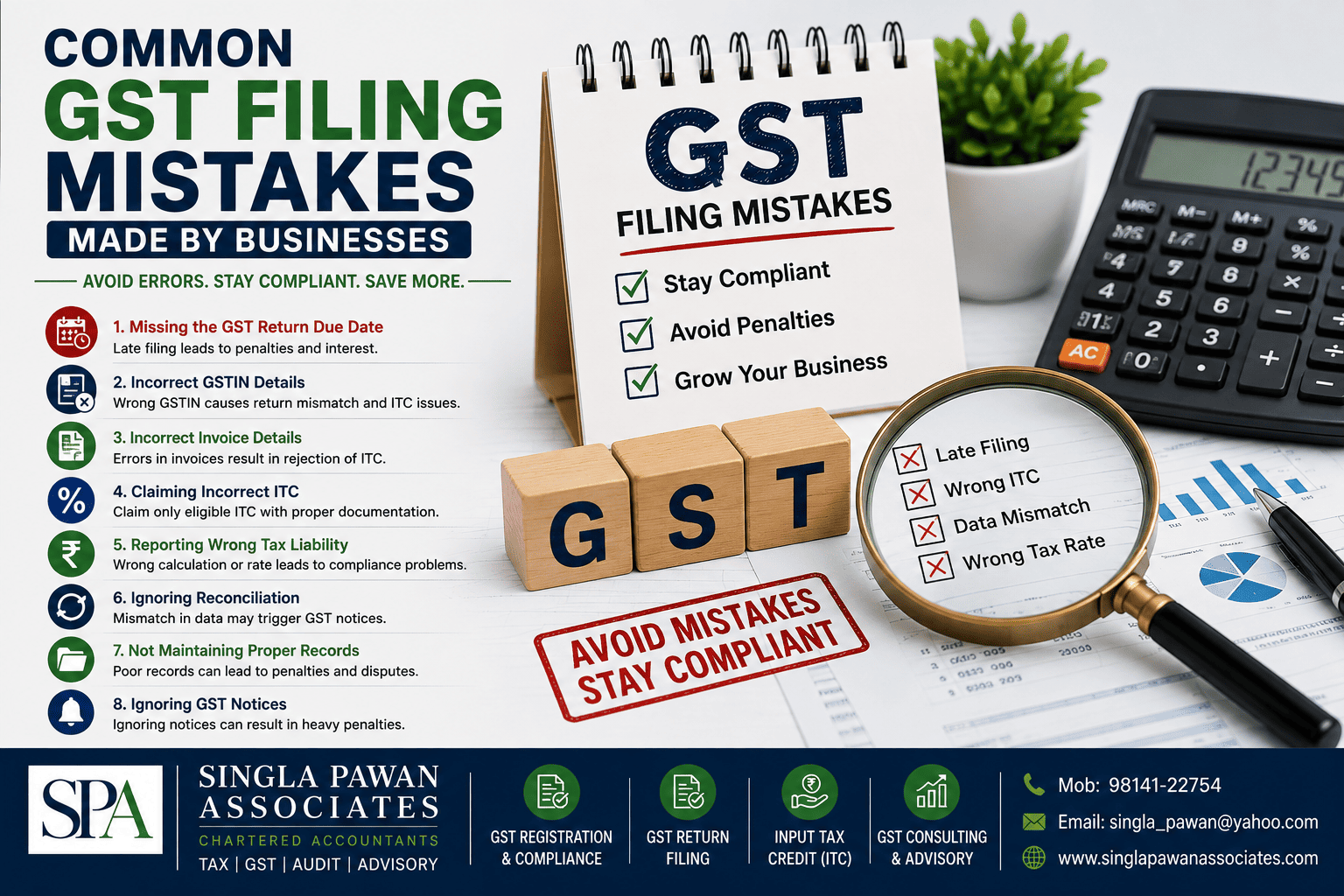
Common GST Filing Mistakes Made by Businesses and How to Avoid Them
Goods and Services Tax (GST) has made India’s indirect tax system more transparent and streamlined. However, many businesses still make mistakes while filing GST returns. Even a small error can result in penalties, delayed Input Tax Credit (ITC), notices from tax authorities, or unnecessary compliance issues.
Whether you are a small business owner, startup, trader, manufacturer, service provider, or freelancer, understanding the common GST filing mistakes can help you stay compliant and avoid costly errors.
In this article, we discuss the most common GST filing mistakes made by businesses and provide practical tips to avoid them.
Why Accurate GST Filing Is Important
GST returns are used by the government to verify tax payments, input tax credit claims, and business transactions. Filing accurate returns helps you:
- Avoid penalties and interest.
- Claim eligible Input Tax Credit (ITC).
- Maintain a good compliance record.
- Build trust with customers and suppliers.
- Prevent GST notices and audits.
Regular and accurate GST filing also improves your business credibility.
1. Missing the GST Return Due Date
One of the most common mistakes is filing GST returns after the due date.
Late filing may lead to:
- Late filing fees.
- Interest on outstanding tax liability.
- Delays in claiming Input Tax Credit.
- Compliance issues for customers and vendors.
Maintaining a GST calendar or using accounting software with reminders can help you file returns on time.
2. Incorrect GSTIN Details
Entering the wrong GST Identification Number (GSTIN) while preparing invoices or filing returns can create reconciliation issues and delay Input Tax Credit claims.
Always verify:
- GSTIN of customers.
- GSTIN of suppliers.
- Business name.
- State code.
Double-checking these details before filing reduces errors.
3. Incorrect Invoice Details
GST invoices must contain accurate information such as:
- Invoice number.
- Invoice date.
- Customer GSTIN.
- HSN or SAC code (where applicable).
- Taxable value.
- GST rates.
Errors in invoices can result in mismatched returns and rejected Input Tax Credit claims.
4. Claiming Incorrect Input Tax Credit (ITC)
Many businesses claim ITC without verifying whether it is legally eligible.
Before claiming ITC:
- Match supplier invoices with purchase records.
- Verify that suppliers have filed the required GST returns.
- Ensure purchases are for business purposes.
- Maintain proper supporting documents.
Incorrect ITC claims can lead to penalties and recovery proceedings.
5. Reporting Wrong Tax Liability
Businesses sometimes report incorrect sales values or apply the wrong GST rate.
Common reasons include:
- Incorrect tax calculation.
- Wrong GST classification.
- Data entry mistakes.
- Duplicate invoices.
Regular reconciliation between sales records and GST returns helps identify such errors before filing.
6. Ignoring Reconciliation
Many businesses do not reconcile:
- Sales records.
- Purchase records.
- Bank transactions.
- GST returns.
- Accounting software.
Monthly reconciliation helps identify mismatches early and reduces the chances of receiving GST notices.
7. Using the Wrong HSN or SAC Code
Every product or service falls under a specific HSN (Harmonized System of Nomenclature) or SAC (Services Accounting Code).
Using the wrong code may result in:
- Incorrect GST rates.
- Return mismatches.
- Department queries.
Consulting a GST expert helps ensure proper classification.
8. Not Maintaining Proper Records
GST law requires businesses to maintain proper records of:
- Sales invoices.
- Purchase invoices.
- Credit notes.
- Debit notes.
- Expense records.
- Stock records.
- E-way bills (where applicable).
Poor documentation can make GST compliance difficult and create problems during audits.
9. Ignoring GST Notices
Some businesses delay responding to GST notices, assuming they are routine communications.
Ignoring notices may lead to:
- Penalties.
- Additional tax demands.
- Legal proceedings.
- Suspension of GST registration in certain cases.
Always review notices promptly and seek professional advice if required.
10. Depending Only on Manual Calculations
Manual GST calculations increase the risk of:
- Data entry errors.
- Duplicate entries.
- Missing invoices.
- Wrong tax calculations.
Using reliable accounting software and reviewing reports before filing can significantly improve accuracy.
Best Practices for Error-Free GST Filing
To reduce GST filing mistakes:
- File GST returns before the due date.
- Verify customer and supplier GSTIN details.
- Reconcile invoices every month.
- Maintain organized financial records.
- Review Input Tax Credit eligibility carefully.
- Keep accounting software updated.
- Consult a Chartered Accountant for complex transactions.
- Monitor GST notifications and rule changes.
Following these practices helps businesses remain compliant and avoid unnecessary complications.
Why Professional GST Assistance Matters
GST compliance involves more than simply filing returns. Businesses must correctly classify goods and services, reconcile invoices, claim eligible ITC, and comply with changing GST regulations.
A qualified Chartered Accountant can help you:
- File GST returns accurately and on time.
- Verify Input Tax Credit eligibility.
- Handle GST notices and departmental queries.
- Maintain proper GST records.
- Ensure ongoing compliance with GST laws.
- Minimize errors and penalties.
Professional guidance saves time and allows business owners to focus on growth.
Conclusion
GST filing mistakes are common, but most of them can be avoided through proper planning, accurate record-keeping, and timely compliance. Reviewing invoices, reconciling accounts, verifying GST details, and filing returns before the due date can help businesses avoid penalties and maintain a strong compliance record.
If you need assistance with GST registration, GST return filing, Input Tax Credit, GST audits, accounting, or tax advisory services, Singla Pawan Associates is here to help. Our experienced best Chartered Accountants in Chandigarh provide reliable, accurate, and timely GST compliance solutions tailored to your business needs.
Disclaimer: This article is for general informational purposes only and should not be considered legal or tax advice. GST laws and compliance requirements may change over time. Please consult a qualified Chartered Accountant for advice specific to your business.